Color Matching for Toddler Learning: A Practical DIY Guide
As designers and content creators, we understand the power of visual organization. We spend hours kerning type and aligning pixels to create harmony. When we bring that same level of intentionality to early childhood education, the results are remarkable. Color matching is one of the foundational skills for toddlers and preschoolers, acting as a gateway to classification, vocabulary, and cognitive development. While there are countless apps available for this, there is a tactile magic in physical learning aids that screens cannot replicate.
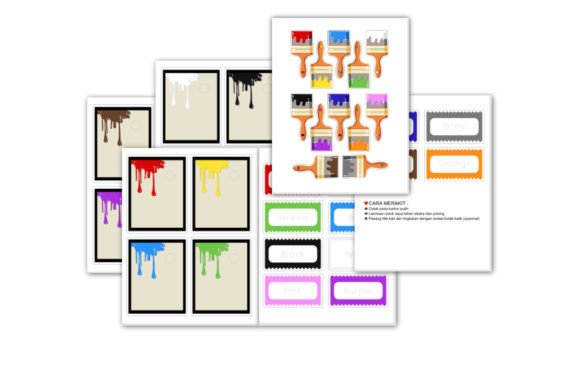
This guide explores the practical side of creating DIY color matching resources. We will look at how to utilize a specific digital asset—a 6-page PDF resource designed for printing—to build durable, engaging tools for young learners. Whether you are a homeschooling parent, a preschool teacher, or a crafter looking to create meaningful gifts, understanding how to execute this project with professional precision makes all the difference.
The Value of Tactile Learning Assets
In an era dominated by digital consumption, there is a growing movement back toward physical interaction. For a toddler, the act of holding a card, feeling the texture of a laminated edge, and physically moving a piece to its matching spot engages motor skills in a way that swiping a screen simply cannot. This is where the concept of "Color Matching" becomes more than just a game; it becomes a sensory experience.
The specific resource we are discussing is a high-resolution digital file, sized at 8.5x11 inches. It includes six PDF pages ready for immediate output. The design of these assets is crucial. They are created to be visually distinct, utilizing clear, saturated colors that help children differentiate between shades. This is similar to how we approach typography in branding: clarity is king. Just as a premium font ensures legibility in a logo, these high-contrast cards ensure the child can easily identify the target color without confusion.
The "personality" of this resource is functional and clean. It avoids visual clutter, which is essential when designing for early learners who are easily overwhelmed by too much noise. The style is practical, focusing on the educational objective rather than unnecessary decoration. This mirrors the philosophy behind a good sans serif font—it communicates the message clearly and efficiently.
Executing the Project: From Digital File to Durable Tool
Creating a lasting educational tool requires more than just hitting the "print" button. The value of this digital download lies in its adaptability. Because you own the file, you can reprint pieces as they wear out or get lost, a significant advantage over expensive store-bought wooden toys. Here is the practical workflow for turning these PDFs into professional-quality learning aids.
- Preparation and Printing: The files are formatted at 300 dpi, which is the industry standard for high-quality print. To achieve the best results, use white cardstock. Standard printer paper is too flimsy for toddler hands; it will bend and tear within minutes. Cardstock provides the necessary rigidity.
- Durability through Lamination: This is the step that separates a temporary activity from a long-term resource. Laminating the sheets before cutting them out creates a waterproof, tear-resistant surface. It also gives the cards a professional finish, similar to a high-end packaging design. It allows you to wipe them clean if sticky fingers get involved.
- Precision Cutting: Take your time with the cutting process. Uneven edges can look sloppy and may cause issues with the final assembly.
- Assembly: The resource suggests attaching hook and loop dots (Velcro). This is an optional but highly recommended step. It adds a satisfying "click" when the child makes a correct match, providing instant positive feedback. It also keeps the pieces from sliding around on the table or floor.
Strategic Applications for Creative Professionals
If you are a content creator, blogger, or small business owner in the parenting or education niche, this type of resource offers immense value. You can use these printables as a "lead magnet" or a value-add for your audience. Providing a tangible, printable activity positions you as a helpful resource rather than just a broadcaster.
Furthermore, consider the brand identity implications. If you run a daycare or a learning center, creating custom-branded versions of these materials (if the license allows) or simply using high-quality, curated resources reflects well on your business. It shows attention to detail and a commitment to quality—traits that parents look for when choosing care for their children.
From a graphic design perspective, analyzing how these educational assets use color can be a good exercise. Notice how the colors are balanced. They use a mix of primary and secondary colors to teach the full spectrum. This is a practical lesson in visual hierarchy—the most important element (the color) is the dominant feature, stripped of distractions.
Integrating Color Matching into a Broader Curriculum
Color matching is just the starting point. Once a child masters the basic colors, you can use these same cards to teach more complex concepts. For example:
- Sorting and Categorization: Ask the child to group all the "cool" colors (blues, greens) and "warm" colors (reds, yellows). This builds early critical thinking skills.
- Vocabulary Building: Expand beyond "red" and "blue." Introduce words like "crimson," "scarlet," "navy," or "teal." This is similar to how a typeface with many weights offers nuance; you are giving the child more linguistic tools to describe their world.
- Scavenger Hunts: Take a card from the set and have the child find an object in the room that matches it. This bridges the gap between abstract representation (the card) and real-world application.
Choosing the Right Resources for Your Needs
When sourcing digital download assets, whether for fonts or educational printables, quality matters. Always look for files that are clearly organized and high resolution. A blurry image or a pixelated PDF ruins the user experience. The "Color Matching" resource discussed here is a solid example of a usable asset: it is ready-to-print, clearly labeled, and includes assembly instructions.
For those in the creative industry, treating these educational projects with the same seriousness as a branding project pays off. The "client" here is the toddler, and their engagement is the metric for success. By using professional-grade materials and thoughtful assembly techniques, you create an environment where learning feels like play, and where the visual tools supporting that play are as polished as the work you put out into the world.