Comfort Colors T-shirt Color Chart: A Visual Guide for Your Brand
When you’re running a small business, a creative shop, or a print-on-demand store, the details matter. It’s not just about the graphic on the front of the tee—it’s about the entire experience you offer your customer. One of the biggest hurdles in online apparel sales is the lack of tactile experience. Customers can’t feel the weight of the fabric or see the exact shade of the dye in person. This is where the Comfort Colors T-shirt Color Chart becomes an indispensable asset for your brand identity.
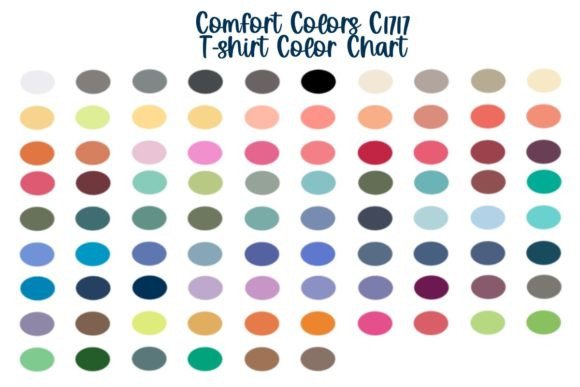
This isn't just a random assortment of colors. It is a carefully curated palette that represents a specific aesthetic: vintage, lived-in, and effortlessly cool. The Comfort Colors C1717 is arguably the king of the "boutique" tee market. It’s the heavy hitter for brands that want to project an air of authenticity and relaxed style. But owning the blanks is only half the battle. You need to communicate those options effectively to your audience. Including a transparent color chart in your product mockups is a practical, user-friendly way to bridge the gap between your design and the final product.
The Aesthetic of the "Lived-In" Look
Why has this specific brand taken over the creative world? It comes down to the personality of the garment. Unlike standard, stiff cotton tees that feel like cardboard until the fifth wash, Comfort colors shirts arrive with that "broken-in" feeling immediately. The visual characteristics are distinct: the fabric has a slightly heathered texture, almost like a vintage premium font that has been distressed just enough to add character without losing legibility.
The dyeing process creates a unique, soft-hand feel that translates visually as warmth. When you look at a Comfort Colors T-shirt Color Chart, you aren't seeing flat, digital colors. You are seeing shades that feel organic. Whether it’s the deep richness of "Butter" or the muted calm of "Blue Jean," there is a depth to these colors that synthetic fabrics struggle to replicate. For designers and content creators, this "un-perfection" is the appeal. It aligns perfectly with the modern typography and design trends that favor organic textures over sterile, corporate crispness. It feels human.
Practical Application: Why the C1717 Chart is Essential
For the entrepreneur or graphic designer, efficiency is key. You don't want to waste time answering emails asking, "Is this shirt more of a rust or a red?" This is where the Comfort Colors C1717 T-shirt Color Chart steps in as a functional design asset.
Because the file comes with a transparent background, it acts like a versatile typeface in your design toolkit. You can overlay it directly onto your lifestyle photography or flat-lay mockups. This serves a dual purpose: it provides essential information while also signaling to the customer that you are a professional operation that values clarity. It’s a subtle form of visual hierarchy; the chart guides the eye from the design to the color options seamlessly.
Where to Use the Color Chart
- Product Mockups: Place the chart in the corner of your main product image. It mimics the experience of pointing at a color swatch in a physical retail store.
- Social Media Graphics: When launching a new drop on Instagram or Pinterest, use the chart to show the full range of availability without cluttering the post with text.
- Website Galleries: Embed the chart in the description area of your web design to help customers visualize the palette alongside your specific graphic.
Influence on Brand Perception and Engagement
The colors you choose for your merchandise say a lot about your brand identity. Using the Comfort Colors palette specifically targets a demographic that appreciates craft, nostalgia, and quality. This is crucial for brand recognition. If you are a blogger or a content creator selling merch, the "Comfort Colors look" acts as a stamp of quality. It tells your audience that you care about the tactile experience of the product.
From a marketing perspective, this influences engagement. When a customer sees a color chart that includes shades like "Pepper," "Violet," or "Bermuda Blue," they are more likely to find a shade that resonates with their personal style. This variety, presented clearly, increases the likelihood of a conversion. It transforms a simple t-shirt purchase into a personalized curation process. The chart facilitates this by removing the guesswork, allowing the customer to focus on the creative font and design you have printed on the chest.
Design Guidance and Pairing Strategies
Integrating the Comfort Colors T-shirt Color Chart into your assets is straightforward, but it requires a designer's eye to execute well. You want the chart to complement your artwork, not compete with it.
Tips for Implementation
- Scale and Hierarchy: Treat the chart like a caption or a secondary element. It should be large enough to read the color swatches clearly, but not so large that it overwhelms your main graphic. Think of it as the "fine print" that adds value.
- Contrast Check: Be mindful of the background of your product photo. If you are using a dark background, ensure the chart stands out. You might need to add a subtle drop shadow or a light container behind the transparent file to maintain readability.
- Font Pairing: If you are adding text labels to the chart (like "Color Options" or "Select Your Shade"), use a clean sans serif font. The chart itself is a visual block, so pairing it with a legible, modern typeface keeps the design professional.
- Consistency: Use the same chart across all your listings. This consistency builds trust. Customers will come to recognize your layout and appreciate the standardized approach to showcasing inventory.
Ultimately, the Comfort Colors C1717 T-shirt Color Chart is more than just a list of colors; it is a bridge between your digital design and the physical product. For the small business owner, the crafter, or the agency, it is a tool that streamlines the buying process and elevates the professionalism of your storefront. By presenting these rich, textured color options clearly, you respect your customer's time and enhance their shopping experience, leading to better engagement and a stronger brand reputation.