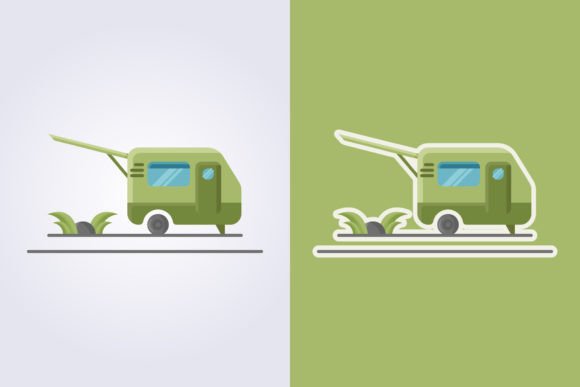
Flat Color Caravan Icon Vector Logo: Your Go-To Camping Design Asset
There’s a specific feeling you get when you see a well-designed icon—immediate recognition and a clear mood. That’s exactly what a Flat Color Caravan Icon Vector Logo delivers. This isn't just a clipart image of a vehicle; it's a distilled symbol of adventure, freedom, and the open road. Rendered in a flat color style, it strips away complex gradients and shadows, leaving behind a clean, bold, and incredibly versatile pictogram. For anyone working on projects related to travel, leisure, or outdoor recreation, this kind of asset is pure gold. It communicates "camping," "journey," and "home on wheels" in a single, instant glance.
The Visual Language of Flat Design
What makes this particular style so effective? Flat color design, a cornerstone of modern typography and illustration, prioritizes clarity and scalability. The caravan icon likely uses solid blocks of color, simple geometric shapes, and minimal detail to form the recognizable profile of a camper van or motorhome. This approach ensures it looks equally sharp on a tiny app icon, a printed sticker, or a large campsite sign. The personality is friendly, approachable, and slightly nostalgic, evoking the classic spirit of a family road trip or a solo van-life adventure. It feels less like a literal photograph and more like a universal symbol—a pictogram anyone can understand.
This simplicity is its greatest strength. Unlike a detailed illustration, a flat icon doesn't compete with other design elements. It supports them. In a logo design context, it provides a strong, memorable mark that can anchor a brand identity. For a summer camp pack design, a series of these icons can create a cohesive visual system for different activities or locations. The style feels contemporary yet timeless, avoiding trendy effects that might date quickly. It’s a design asset built for longevity and broad appeal.
Where This Icon Truly Shines: Practical Applications
Thinking about where to use a Flat Color Caravan Icon Vector Logo? The applications are surprisingly diverse, spanning both digital and print landscapes. Its core function is to serve as a visual shorthand for concepts related to camping, travel, and mobile leisure.
For branding and marketing, it’s perfect. A small business selling camping gear, a tour operator specializing in RV journeys, or a blog about outdoor adventures can integrate this icon into their logo, website favicon, social media profile pictures, and email headers. It instantly communicates the niche without needing a single word. In packaging design, it can mark products as "travel-friendly" or "for outdoor use." Think about labels for portable grills, camping cookware, or travel-sized toiletries.
In the digital realm, it excels as part of a UI icon set for travel apps or websites. It can denote a "campsite finder" feature, a "road trip planner," or a "vehicle rental" section. For content creators and bloggers, it's a fantastic tool for creating engaging pins, Instagram stories, or YouTube thumbnails about their latest trip. It adds a professional, polished touch to social media graphics that a generic stock photo might not achieve.
Even in print and personal projects, the icon has a place. Imagine it on custom stickers for a travel journal, as a motif on invitations for a "glamping" themed party, or as a simple, bold graphic on a t-shirt for a family reunion at a campsite. Its vector nature means it can be scaled to any size without losing quality, making it ideal for both a small favicon and a large banner.
Making the Most of Your Design Asset
Simply having the icon file isn't enough; using it thoughtfully is key. First, consider color palette integration. The "flat color" aspect means the icon comes in specific hues. You’ll want to ensure these colors harmonize with your overall brand identity or project palette. Sometimes, you may need to adjust the colors (if the license permits) to match your scheme perfectly. This is where understanding basic color theory helps—complementary or analogous colors can make the icon pop or blend seamlessly.
Next, think about visual hierarchy and placement. The icon should serve as a focal point or a clear supporting element, not get lost in a cluttered design. Pair it with clean, readable typography—often a sans-serif font works best for a modern, uncluttered look. The icon itself can act as a visual anchor, guiding the viewer's eye to key information like a company name or a tagline.
Finally, always check the licensing. Whether it's a free resource or a premium font/design asset, understand the terms. Can you use it for commercial projects? Can you modify it? Is attribution required? Respecting these terms is part of professional practice and ensures you're building your brand on a solid, legal foundation. A high-quality vector logo like this is a small investment that can significantly elevate the professionalism and recognizability of your work, making it a worthwhile addition to any designer's toolkit.