Exploring the Gingham in Color Chart Pattern Pack
There is a reason why the gingham pattern has never really gone out of style. It evokes a sense of nostalgia, warmth, and effortless organization, yet it manages to feel fresh every time it reappears in modern design trends. If you have been looking for a way to inject that timeless charm into your digital or physical projects without the hassle of creating patterns from scratch, the Gingham in Color Chart digital paper pack is a resource you need in your toolkit. This collection is not just about a simple checkered look; it is a comprehensive set of high-resolution assets designed to streamline your workflow and elevate your creative output.
The Anatomy of the Color Chart Pattern
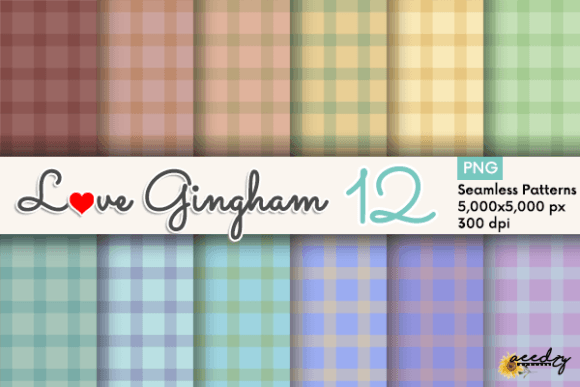
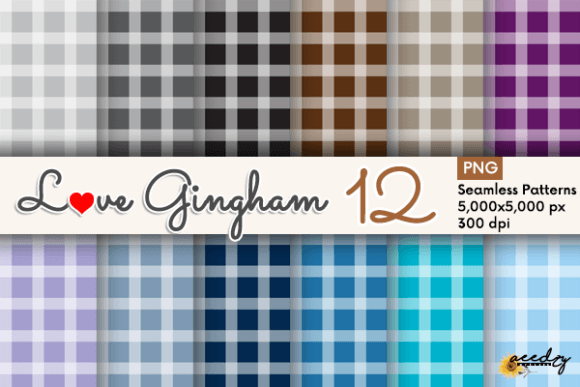
At its core, the Gingham in Color Chart pattern set is built on the principles of balance and versatility. The visual style is crisp and clean, featuring the classic two-tone weave that makes gingham so recognizable. However, what sets this specific collection apart is the "Color Chart" aspect. Instead of offering just a few shades, this pack provides a spectrum. You will find that the palette covers a wide range of hues, allowing you to match specific brand identities or seasonal themes with precision.
The personality of these patterns leans toward the professional yet approachable. Unlike a chaotic floral or a stark geometric, gingham offers structure without rigidity. It feels organized. When you use a pattern from this set, you are communicating a sense of order and care. The texture is subtle enough to serve as a background that does not scream for attention, yet distinct enough to add tangible depth to a flat design. It is the kind of background that makes foreground elements—like typography or photography—pop without competing for dominance.
Practical Applications: From Screen to Print
One of the biggest challenges in modern graphic design is maintaining consistency across different mediums. A design that looks good on a screen often falls apart when printed, or vice versa. The Gingham in Color Chart pack solves this problem through its technical specifications. With files sized at 5,000 x 5,000 pixels and a resolution of 300 DPI, these assets are production-ready for almost any application.
For the digital creator, these patterns are perfect for web design and social media graphics. Imagine using a soft pastel gingham as a background for an Instagram story or a Pinterest pin. It immediately sets a mood—often cozy, crafty, or vintage—depending on the color you choose. Because the patterns are seamless, you can tile them infinitely to cover a website header or a blog background without worrying about visible seams or awkward breaks.
For those in the physical product space, the utility is just as high. If you are a small business owner designing packaging, these files are robust enough for high-quality printing. Consider using a bold red or blue gingham for a summer product line, or a muted grey for a sophisticated stationery brand. The applications extend to wedding invitations, where gingham can evoke a rustic farmhouse feel, or to planners and journal covers, where the grid-like nature of the pattern visually represents organization and planning.
Integrating Gingham into Your Brand Identity
Choosing a pattern for your brand is just as important as choosing a typeface. The visual texture you use in the background communicates your brand’s personality before a customer reads a single word. Incorporating the Gingham in Color Chart into your brand identity can be a strategic move to appear more grounded and authentic.
For example, a bakery or a lifestyle blogger might use a warm-toned gingham to reinforce a homemade, artisanal quality. Conversely, a tech startup might use a monochrome, high-contrast gingham to suggest a grid-based, organized approach to data. The key is that this pattern set allows you to experiment. Because you have access to a full color chart, you can test how different shades align with your existing logo design and color palette.
When pairing these patterns with fonts, think about contrast. A busy gingham works best with clean, sans serif fonts that provide a modern counterpoint to the traditional pattern. If you are going for a vintage editorial look, pairing a pastel gingham with a classic serif font or a flowing script font can create a romantic, cohesive aesthetic. The pattern acts as the stage, and your typography becomes the actor; you need both to work in harmony for the scene to be effective.
Technical Workflow and Usability
From a production standpoint, the Gingham in Color Chart pack is designed for ease of use. The files are delivered in a ZIP file containing 12 PNG files. PNGs are ideal for this type of asset because they handle transparency and compression well, though for these specific patterns, the focus is on the solid, repeating weave.
The "seamless" feature is perhaps the most critical technical aspect here. In design software—whether you are using Adobe Photoshop, Illustrator, Canva, or even basic editors—tiling a pattern incorrectly can ruin a project. These files have been engineered to lock together perfectly. You can scale them, crop them, and tile them, and the grid remains unbroken. This is particularly useful for scrapbooking and photo albums, where you might want to create a custom background paper that extends to the edge of the page.
Furthermore, the high resolution ensures that you are not limited to digital use. If you are designing fabric patterns for print-on-demand services or creating unique gift wrapping paper, the 300 DPI specification ensures that the printed result is sharp and professional. There is no pixelation, even when the pattern is viewed up close.
Maximizing Value in Your Creative Projects
To get the most out of this digital paper pack, think beyond the obvious. While it is excellent for invitations and cards, consider using gingham in subtle ways. Use a very light, almost white gingham texture to add "paper feel" to a digital mockup. Use a dark, moody gingham for a wallpaper design aimed at a masculine demographic. Use it for shop tags to give products a boutique, handcrafted appearance.
The versatility of the Gingham in Color Chart makes it a valuable design asset for anyone from the hobbyist making birthday cards to the professional marketer building a campaign. It bridges the gap between digital precision and handmade charm. By incorporating these patterns into your library, you are equipping yourself with a tool that is both timeless and adaptable, ready to meet the demands of whatever creative challenge you face next.